Key Takeaways
- Performance upgrades require a structured process that starts with a consultation and vehicle inspection before any parts are ordered or installed.
- Baseline testing, including dyno runs and diagnostic scans, gives a measurable starting point to compare against after-install results.
- Proper installation involves careful disassembly, torque specifications, and verifying clearances to prevent costly damage during the build.
- Tuning and calibration are just as important as the physical install, since new parts often require updated engine mapping to run correctly.
- Road testing, follow-up inspections, and documentation protect both the car owner and the shop over the long term.
- Certifications, training, and shop equipment directly affect the quality of any aftermarket build, so choosing the right specialist matters.
- A good upgrade plan balances power goals with reliability, drivability, and the vehicle’s intended use.
How Performance Upgrades Actually Begin at the Shop
Walking into a shop with dreams of a faster, louder, better-handling car is exciting. But the real work starts long before any wrench touches a bolt. The process is methodical, and skipping steps almost always leads to disappointing results or expensive mistakes down the road.
Most people picture performance work as a dramatic montage of parts coming off and new ones going on. In reality, a good build is paperwork, measurements, diagnostics, and planning before anything gets loud. The quality of that groundwork is usually what separates a car that gains real performance from one that just sounds angrier at the lights.
This guide walks through exactly how a professional handles a performance upgrade from the first phone call to the final road test. If you are thinking about modifying your own vehicle, understanding this workflow helps you ask smarter questions, spot shortcuts, and get better results for your money.
Starting With the Customer Consultation

Every serious build begins with a conversation. The technician needs to know what the owner actually wants from the car. More horsepower is vague. Better quarter-mile times, sharper corner response, a louder exhaust note, or safer braking during track days are all very different goals, and each one points toward different parts and labor.
During this consultation, the technician asks about budget, timeline, and how the car will be used day to day. A daily driver with occasional canyon runs needs a different approach than a dedicated weekend track car. The shop will also ask about future plans, because a smart build order can save thousands of dollars by avoiding parts that get replaced in the next stage.
Expect a technician to push back on unrealistic combinations. If someone wants 600 horsepower on stock internals, a professional will explain why that is a bad idea instead of just taking the money. That honest back-and-forth is one of the clearest signs you are working with someone who actually cares about the outcome.
Performing a Full Pre-Build Vehicle Inspection
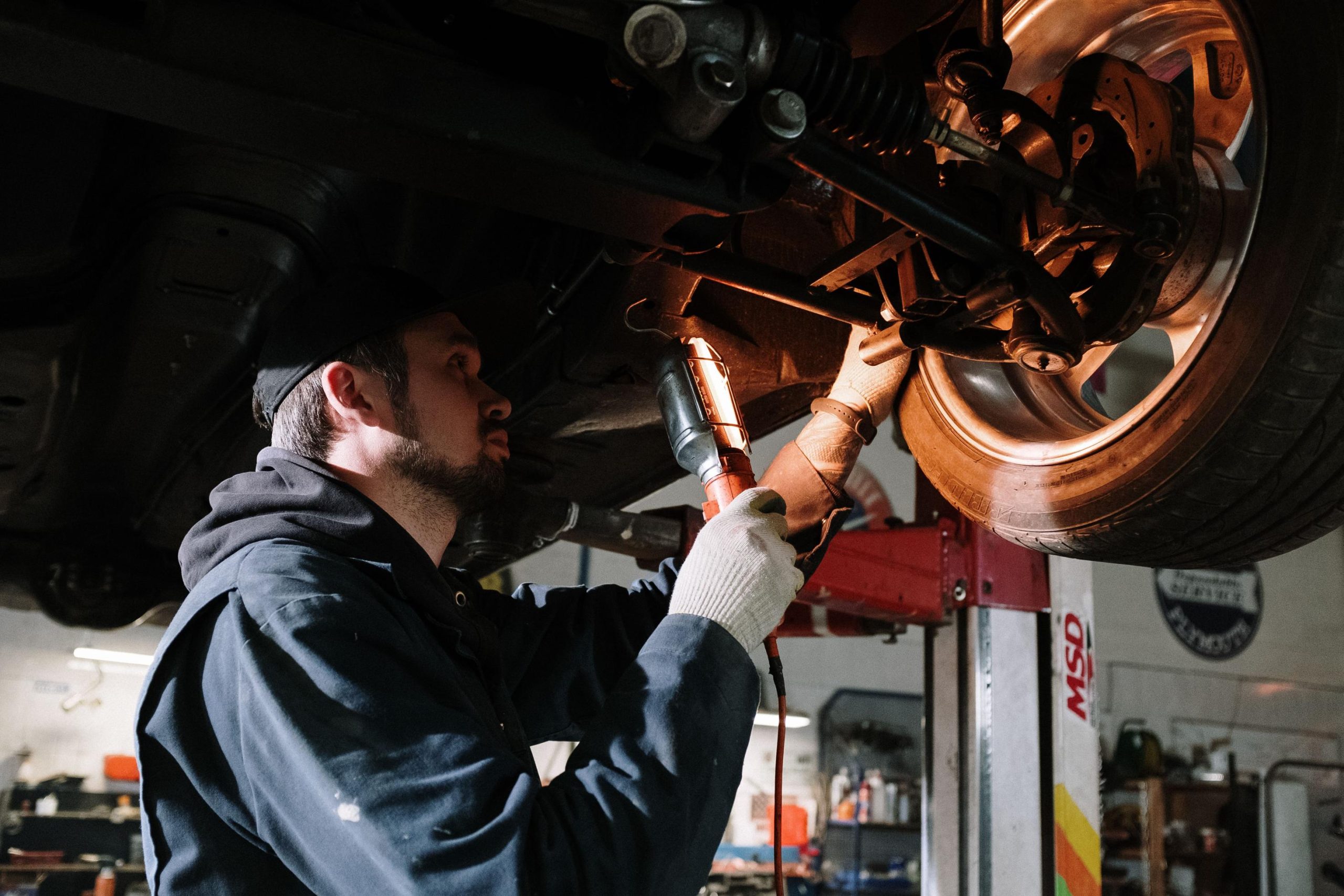
Before any parts get ordered, the car goes up on a lift for a complete inspection. The point is simple: you cannot bolt power onto a weak foundation. Worn bushings, leaking seals, tired brakes, and cracked hoses will all become bigger problems once the engine makes more power.
A proper inspection covers the engine bay, underbody, suspension, brakes, cooling system, drivetrain, and electrical connections. The technician is looking for anything that needs to be fixed or reinforced before the upgrade work begins. Finding a cracked motor mount now is cheap. Finding it after a dyno pull snaps it in half is not.
What a Pre-Install Inspection Typically Covers
Here is what a thorough shop will check before signing off on the build:
- Engine compression, leak-down readings, and oil condition
- Cooling system pressure test and radiator condition
- Transmission fluid, clutch wear, or torque converter behavior
- Suspension bushings, ball joints, and shock performance
- Brake pad thickness, rotor condition, and fluid quality
- Fuel system pressure, injector flow, and pump health
If anything on that list fails, it gets addressed first or added to the build quote. This is also when the shop confirms the vehicle is a safe candidate for the upgrade path the owner wants.
Establishing a Baseline With Diagnostics and Dyno Runs
You cannot measure improvement without knowing where you started. That is why baseline testing happens before any new parts go on. The car is scanned for existing fault codes, then strapped to a dynamometer for a set of controlled pulls that record horsepower, torque, and air-fuel ratios across the rev range.
These baseline numbers do two important things. They give the owner a real before-and-after comparison instead of a vague feeling in the seat. They also help the tuner spot problems like weak injectors, airflow restrictions, or timing issues that need to be sorted out before the new hardware shows up.
So what does an auto technician do with all this baseline data once it is collected? It becomes the reference point for every decision that follows, from fueling targets to boost levels to how aggressive the final tune can be. Good shops print or email these sheets so the customer has a record of the starting point.
Selecting Parts That Actually Work Together
Parts selection is where a lot of amateur builds go wrong. Buying the most expensive turbo, intake, and exhaust from three different brands does not automatically make a fast car. The components have to work together as a system, with matched flow rates, compatible mounting, and software support from the tuner.
Experienced auto technicians treat parts selection like engineering, not shopping. They calculate target airflow for the horsepower goal, then choose a turbo or supercharger sized for that range. Fuel injectors, pumps, intercoolers, and even spark plugs get picked based on the math, not the brand loyalty of the moment.
Common Upgrade Categories and How They Interact
Most performance builds fall into a few main categories that overlap in meaningful ways:
- Intake and exhaust flow improvements
- Forced induction such as turbochargers or superchargers
- Fuel system upgrades including injectors, pumps, and lines
- Engine internals like pistons, rods, and head work
- Suspension, brakes, tires, and chassis bracing
- Transmission, clutch, and driveline reinforcement
According to Auto Training Centre, performance specialists spend their time on tasks like dialing in engines, upgrading suspension and braking components, and fitting forced induction hardware such as turbochargers. That range of work is exactly why system-level thinking matters so much. Changing one category almost always affects another.
The Physical Installation Process Step by Step
Once the parts arrive and are inventoried, the real hands-on work begins. The technician starts by protecting the car with fender covers and seat covers, then disconnects the battery to prevent electrical damage or accidental airbag deployment during the teardown.
Disassembly follows a logical order. Intake and exhaust components come off first on most forced-induction builds, followed by any accessories that block access to the install points. Every bolt, bracket, and clip gets labeled or photographed so nothing gets lost or mis-routed during reassembly. Skipping this organization step is how little rattles and missing fasteners end up haunting a build for years.
Installation itself follows the manufacturer’s instructions, torque specs, and sequence requirements. The technician checks clearances between new components and nearby heat sources, moving parts, or wiring. Gaskets and seals get replaced, not reused. Fluids get changed to the specifications the new parts demand, which often means higher-grade oil, upgraded coolant, or different transmission fluid.
Wiring, Electronics, and System Integration
Modern performance parts are not just mechanical. Many of them involve sensors, controllers, and wiring that must tie into the car’s existing electrical system. Doing this cleanly is one of the hardest parts of the job and one of the most common places where amateur installs go sideways.
According to the Mobile Electronics Certification Program, certified installers are expected to prove their skills in electrical theory, installation methods, troubleshooting, and integrating new systems into the vehicle when they work on aftermarket upgrades. That skill set matters just as much for performance work as it does for audio or lighting, because a single bad ground or crossed signal wire can cause intermittent problems that take days to chase down.
Good wiring work looks almost invisible. Looms are routed away from heat and sharp edges, secured at regular intervals, and terminated with proper connectors instead of twist-and-tape splices. Grounds are clean, bolts are tight, and every new sensor reports correctly on the diagnostic tool before the car leaves the lift.
Tuning, Calibration, and What the Technician Does After the Install
Bolting on new hardware without retuning the engine is like putting race fuel in a lawnmower. The computer has to be updated to match the new airflow, fuel demand, and ignition requirements of the modified engine. Without this step, the car can run lean, knock, or even damage itself within a few hard pulls.
Tuning happens in stages. The initial map is loaded, the engine is started, and the tuner watches livedata for temperature, pressure, knock activity, and air-fuel ratios. Small adjustments are made at idle and part throttle first, then the tuner works up through the rev range in careful increments. A full dyno tune can take hours or even multiple sessions, especially on forced-induction builds where every change affects the next variable.
The Difference Between a Base Map and a Custom Tune
Many aftermarket parts ship with a generic map that will keep the engine alive. That is not the same as a tune built for your specific car on your specific fuel. The differences usually show up here:
- Base maps are conservative and leave power on the table
- Custom tunes account for altitude, fuel quality, and wear
- A dialed-in map improves drivability, not just peak numbers
- Knock correction and fueling are tighter on a custom tune
- Cold starts, idle quality, and part-throttle manners get attention
A shop that offers only flash tunes without datalogging or follow-up adjustments is leaving a lot of performance and safety on the table.
Road Testing and Real-World Validation
Dyno numbers are useful, but a car is not driven on a dyno. After the tune is finalized, the technician takes the car out for a structured road test. This is not a joyride. It is a controlled drive that checks how the car behaves at different loads, temperatures, and throttle positions.
During the road test, the technician watches for drivability issues like hesitation, surging, or odd shift behavior. They also listen for new noises, feel for vibrations, and monitor data through a laptop or handheld scanner. Any fault code, even a minor one, gets logged and sorted before the car is handed back.
Brakes, suspension, and tires all get evaluated under the new power level. A car that made 300 horsepower stock and now makes 450 needs stopping and handling that match. If the road test reveals that something is not keeping up, the shop will flag it and recommend the next round of upgrades before the owner gets into trouble.
Post-Install Inspection and Re-Torque
After the shakedown drive, the car goes back on the lift for a post-install inspection. Heat cycles, vibration, and real-world load can loosen fasteners that felt tight during assembly. Exhaust clamps, intake couplers, suspension bolts, and driveline fasteners all get checked and re-torqued where needed.
Fluids are rechecked too. Fresh oil can show early signs of a problem that was not visible on the dyno. Coolant levels settle after a few heat cycles and sometimes need topping off. If the build included a new clutch or transmission work, fluid checks become even more important during this follow-up stage.
This is also the stage where the specialist looks for any leaks, chafing, or contact points that only show themselves after the car has been driven. Catching these early is what keeps a fresh build from turning into a warranty argument three months later.
Documentation, Warranty, and Handoff
A professional build comes with paperwork. The customer should leave with a folder or digital package that includes before-and-after dyno sheets, the parts list with serial numbers, the tune revision, torque specs used on major fasteners, and any break-in instructions for new components.
This documentation matters for several reasons. It protects the owner if a part fails under warranty. It helps the next technician who works on the car understand what was done. It also increases resale value, because a documented build is far easier to sell than a mystery car with unknown modifications.
The handoff conversation covers break-in procedures, fluid change intervals, and what to watch for in the first few hundred miles. A good shop will schedule a follow-up visit to recheck the car after a set mileage, usually somewhere between 500 and 1000 miles depending on the build.
Why Certifications and Training Matter for Performance Work
Not every shop is equipped to handle serious aftermarket builds. Performance work sits at the intersection of mechanical skill, tuning knowledge, and electrical troubleshooting, and the people doing it need training that matches. Credentials like ASE, manufacturer-specific programs, and tuner certifications from software vendors are all signs that the person touching your car has done the homework.
For owners of imported or specialty vehicles, looking into European technician certifications before choosing a shop is worth the extra effort. European platforms often use proprietary diagnostic systems, specific torque procedures, and tuning tools that general shops may not own or know how to operate correctly.
Questions Worth Asking Before You Book the Work
Before handing over the keys, these questions help separate pros from pretenders:
- What experience do you have with this exact platform?
- Can I see dyno sheets from similar builds you have completed?
- Who writes the tune, and do they datalog the car afterward?
- What is your policy if something fails during the build?
- How do you handle break-in and follow-up checks?
Clear, confident answers are what you want. Vague responses or defensive attitudes are signals to keep looking.
Balancing Power Goals With Reliability
The last piece of a successful performance project is honest goal-setting. Chasing the biggest horsepower number on paper usually produces a car that is miserable to drive and fragile under load. A smart build targets a power level the chassis, drivetrain, and supporting systems can handle comfortably.
Reliability comes from headroom. Running an engine at 80 percent of its safe capacity will last far longer than running it at 100 percent every time the throttle opens. A good specialist will steer the owner toward a number that is exciting but sustainable, with cooling, fueling, and mechanical margins built in.
The most satisfying builds are the ones the owner actually drives. A car that starts every morning, handles traffic without drama, and still pulls hard when asked is worth more than a dyno queen that spends its life on jack stands waiting for the next repair.
Conclusion
Performance upgrades are not a parts swap. They are a structured project that blends diagnostics, engineering, hands-on skill, and tuning into a single build. Every stage, from the first consultation to the final road test, exists for a reason, and skipping any of them is how good intentions turn into expensive lessons.
Owners who understand the workflow get more out of their money. They ask better questions, choose better shops, and set goals that match what the car and the budget can actually deliver. That knowledge also makes the finished product more enjoyable, because the driver knows exactly what went into the car and why it behaves the way it does.
If you are planning a build, take the time to find a specialist whose process looks like the one described here. The right shop will welcome your questions, show their work, and treat your car like something worth doing right the first time. That is the difference between a modified car and a properly built one.